Blog
Designing for Real Life, Not Just the Render
Author
Sarah Porter
Published
Feb 12, 2026
Category
4 min read
Minimums. Efficiency. Yield. We’re very good at making plans work. The harder question is whether those spaces still feel generous six months after handover. Our latest blog explores compliance, liveability and what actually holds up once people move in
Why End-User Thinking Is Quietly Driving Better Outcomes
As architects, we spend a huge amount of time in plan. We draw, test and refine layouts until they align visually and technically, often within tight spatial constraints. We know the minimums. We understand the rules of thumb. On paper, many of these apartment’s work. The question is whether that same logic always translates as comfortably in real life.
Most multi-residential projects are compliant. They meet planning controls, satisfy the brief, and align with the relevant codes.
The difference tends to show up later. Some apartments simply feel easier to live in. Others meet the same criteria but feel tighter once furnished and daily routines settle in.
These issues rarely stem from a lack of care or capability. With pressure to maximise floor plates and extract value from every millimetre, it becomes easy to focus tightly on efficiency. When attention stays at that micro scale, stepping back to consider the broader human experience becomes harder.
Each decision on its own feels reasonable. A small sacrifice here, a slight squeeze there, but together, it’s death (to the floor plan) by a thousand cuts and once construction begins, most of those decisions are effectively locked in. The opportunity to adjust how a space truly functions narrows quickly.
When the end-user is forefront of thought, you’re no longer looking at tidy lines on a screen. The focus moves beyond what fits on a plan to how a space will be used over time.
This isn’t about sacrificing efficiency. It’s about testing layouts against real patterns of living. How someone moves through the apartment. Where furniture realistically sits. Whether storage is accessible in daily use, not just diagrammatically correct.
When that lens is applied early and consistently, decisions don’t unravel later. Layouts feel resolved before they’re fixed, and coordination issues surface sooner. Efficiency remains intact, but it’s supported by clearer intent and conviction.
To be clear, the end user is already considered in most projects. Aesthetics, materiality, views and outlooks and lifestyle positioning receive significant attention. Developments are carefully crafted to align with what the market wants to see.
Where things can drift is in the lived experience behind the pretty render.
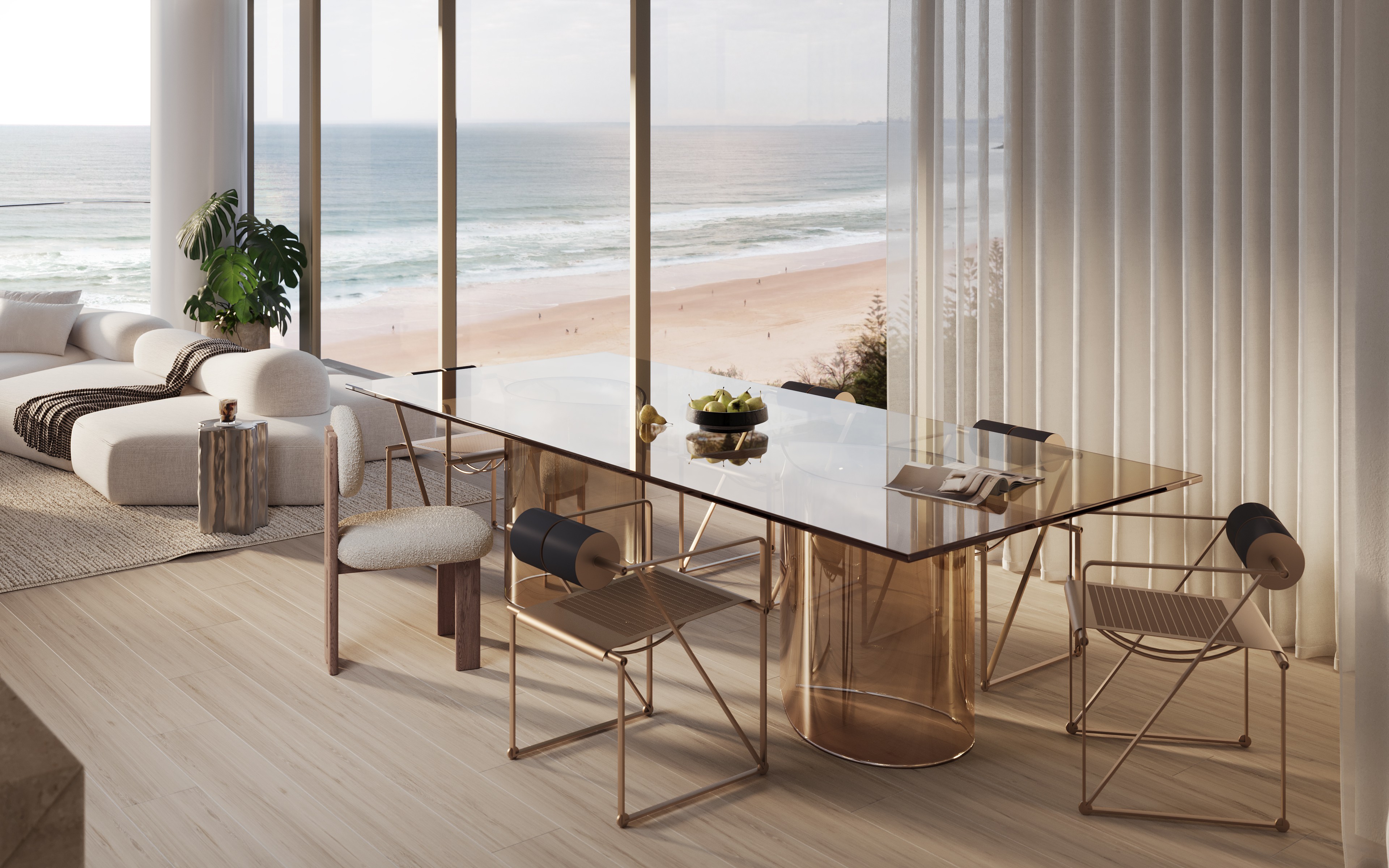
Hero images capture light and atmosphere. They don’t show how a door swing affects circulation, or how much clearance remains once a dining table is placed. They don’t reveal whether a space still feels generous after months of everyday use.
When visual impact takes precedence over daily function, it creates a gap between expectation and experience. That gap may not show up immediately in sales results, but over time it surfaces in feedback, reputation, and long-term performance.
A great design doesn’t have to choose between aspiration and practicality. It resolves both.
It presents well, wows the buyers, and aligns with market expectations. At the same time, each apartment functions comfortably once occupied. Storage works. Circulation feels intuitive. Proportions remain liveable beyond the launch phase.
That alignment doesn’t happen by accident. It comes from testing how a space will actually be lived in while there is still room to adjust. It requires stepping back from the plan long enough to ask whether it will still feel comfortable once the furniture is in place and routines take over.
When aesthetics and liveability are resolved together, buildings simply hold up better. They don’t date quickly, and they don’t require constant explanation or justification. They just work.
For us, that balance has become a defining measure of success. Not just how a project looks at completion, but how it lives over time.
Written by Sarah Porter, Founder at Senna
Other Blogs